
Develop Everyday Korean Phrases for Daily Life: Techniques That Actually Work

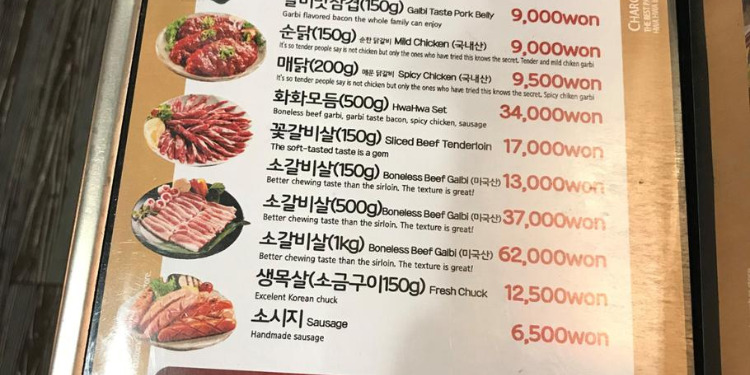
Ever found yourself at a Korean restaurant, staring at the menu in confusion, desperately wishing you could order like a local instead of pointing awkwardly at pictures? Or perhaps you’ve hesitated to strike up a conversation with Korean speakers because the phrases you memorized from textbooks suddenly felt clunky and unnatural? You’re not alone. The gap between classroom Korean and real-world conversations is where most learners stumble—especially when it comes to the everyday phrases that native speakers use without a second thought.
Here’s the truth: mastering everyday Korean isn’t about memorizing thousands of vocabulary words or perfecting complex grammar rules. It’s about building confidence through practical, real-life language that you can actually use today. Let’s explore techniques that actually work for developing the Korean phrases you need for daily life.
Why Traditional Korean Learning Methods Leave You Tongue-Tied

Most korean language learning programs focus heavily on grammar structures and formal speech patterns. While these foundations are important, they often leave learners unprepared for the spontaneous, informal exchanges that make up most daily interactions. You might know how to conjugate verbs perfectly on paper, but freeze when a cashier asks a simple question at the convenience store.
The real problem? Traditional methods don’t prioritize confidence building techniques alongside linguistic accuracy. They teach you what to say but not how to feel comfortable saying it. This creates a psychological barrier that’s just as challenging as any grammar rule.
Consider this common scenario: You’ve studied Korean for months, but when you finally visit Seoul, you discover that natives speak faster than your listening comprehension exercises, use slang you’ve never encountered, and employ casual speech patterns your textbook barely mentioned. The result? You retreat back to English or rely on translation apps, and your speaking confidence plummets.
The solution lies in shifting your approach from passive learning to active, contextual practice—especially around universal experiences like eating, one of the most social and frequent activities in Korean culture.
Food-First Language Learning: Your Gateway to Natural Korean

Food culture in Korea goes far beyond simply eating—it’s where relationships are built, business is conducted, and language flows naturally. This makes food-related vocabulary and phrases the perfect foundation for your korean learning program. Why? Because you’ll use these phrases repeatedly, in multiple contexts, giving your brain the repetition it needs to move from conscious recall to automatic usage.
Let’s start with essential restaurant phrases that immediately boost your confidence:
주문할게요 (jumunhalgeyo) – I’ll order now
이거 주세요 (igeo juseyo) – Please give me this
맛있어요 (masisseoyo) – It’s delicious
배불러요 (baebulleoyo) – I’m full
계산해주세요 (gyesanhaejuseyo) – Check, please
But here’s where most learners stop—and where you should accelerate. Don’t just memorize these phrases; create mental “movies” around them. Visualize yourself entering a Korean BBQ restaurant, sitting down, making eye contact with the server, and confidently saying 삼겹살 2인분 주세요 (samgyeopsal i-inbun juseyo) – “Two servings of pork belly, please.”
This visualization technique activates the same neural pathways you’ll use in real situations, building confidence before you even speak. When combined with actual practice opportunities through platforms like uBitto’s learner programs, which connect you with real-life Korean conversation practice, you create a powerful learning loop that bridges the gap between knowledge and application.
The Confidence Pyramid: Building from Foundation to Fluency

Effective language mastery follows a pyramid structure. At the base, you need survival phrases—the absolute essentials that get you through basic interactions. The middle layer consists of conversational phrases that let you engage more naturally. At the top, you develop nuanced expressions that convey personality and emotion.
Base Layer: Survival Food Phrases
These phrases work in virtually any food context and should become automatic:
물 좀 주세요 (mul jom juseyo) – Water, please
이게 뭐예요? (ige mwoyeyo?) – What is this?
매워요? (maewoyo?) – Is it spicy?
안 매운 걸로 주세요 (an maeun geollo juseyo) – Please give me something not spicy
포장해주세요 (pojanghaejuseyo) – Please pack it to go
Middle Layer: Conversational Engagement
Once comfortable with basics, expand to phrases that show cultural awareness and create connection:
잘 먹겠습니다 (jal meokgetseumnida) – I will eat well (said before eating)
잘 먹었습니다 (jal meogeotseumnida) – I ate well (said after eating)
이 집 진짜 맛있네요 (i jip jinjja masinneyo) – This place is really delicious
추천 메뉴가 뭐예요? (chucheon menyuga mwoyeyo?) – What’s your recommended menu item?
같이 먹을래요? (gachi meogullaeyo?) – Do you want to eat together?
Top Layer: Nuanced Expression
These phrases demonstrate deeper language understanding and cultural fluency:
입맛이 없어요 (immasi eopseoyo) – I have no appetite
느끼해요 (neukkihaeyo) – It’s too greasy/rich
입에 딱 맞아요 (ibe ttak majayo) – It suits my taste perfectly
한 입만 맛봐도 될까요? (han imman matbwado doelkkayo?) – May I have just one taste?
The key to moving up this pyramid isn’t time—it’s repetition in varied contexts. This is where structured practice with immediate feedback becomes invaluable, something that modern korean language learning platforms like uBitto’s structured programs are specifically designed to provide.
The Pattern Recognition Method: Speaking Without Translation

Here’s a breakthrough technique that accelerates language mastery: instead of translating English thoughts into Korean, train yourself to recognize and reproduce Korean patterns directly. Food contexts are perfect for this because they involve predictable patterns with interchangeable vocabulary.
Consider this pattern: [Food item] + 좀 주세요 (jom juseyo)
김치찌개 좀 주세요 – Please give me some kimchi stew
된장찌개 좀 주세요 – Please give me some soybean paste stew
비빔밥 좀 주세요 – Please give me bibimbap
Once you recognize this pattern, you can plug in any food item. Your brain stops translating word-by-word and starts thinking in chunks—the way native speakers actually process language.
Another powerful pattern: [Food/drink] + 하나/한 잔 더 주세요 (hana/han jan deo juseyo) – One more [food item]/one more cup/glass, please
소주 한 잔 더 주세요 (soju han jan deo juseyo) – One more glass of soju, please
물 한 잔 더 주세요 (mul han jan deo juseyo) – One more glass of water, please
만두 하나 더 주세요 (mandu hana deo juseyo) – One more dumpling, please
Practice these patterns until they become automatic. Record yourself using them with different vocabulary. Better yet, practice with AI-assisted feedback systems that can correct your pronunciation and grammar in real-time, helping you build correct habits from the start. Modern platforms are increasingly incorporating such technology to help learners achieve authentic Korean communication skills more efficiently.
Cultural Context: Why Food Language Matters Beyond Vocabulary

Understanding Korean food culture dramatically improves your language confidence because it explains why certain phrases matter, not just what they mean. This cultural context transforms mechanical phrase memorization into meaningful communication.
For instance, Koreans almost always say 잘 먹겠습니다 (jal meokgetseumnida) before eating and 잘 먹었습니다 (jal meogeotseumnida) after finishing. These aren’t just polite phrases—they express gratitude to everyone involved in bringing the food to the table, from farmers to cooks to the person who paid. When you use these phrases naturally, you’re not just speaking Korean; you’re participating in a cultural practice that Koreans deeply appreciate.
Similarly, the emphasis on shared eating in Korean culture means that phrases about sharing, offering, and group dining appear constantly. 같이 먹어요 (gachi meogeoyo) – “Let’s eat together” – isn’t just an invitation; it’s a relationship-building gesture. Understanding this cultural weight helps you use the phrase with appropriate warmth and timing.
Korean dining etiquette also involves waiting for the eldest person to start eating, pouring drinks for others while never pouring your own, and often insisting on paying the bill (제가 살게요 – jega salgeyo – “I’ll pay”). These social scripts provide predictable contexts where you can practice specific phrases repeatedly, building confidence through cultural participation rather than isolated language drills.
For educators looking to incorporate these cultural elements into their teaching, AI-powered teaching tools can help create immersive, culturally-rich lesson plans that go beyond vocabulary lists.
Practical Implementation: Your 30-Day Food Phrase Challenge
Knowledge without application remains theoretical. Here’s a concrete 30-day plan to develop everyday Korean phrases for daily life, using food contexts as your training ground:
Days 1-10: Foundation Building
- Choose 5 survival phrases and use them in your daily routine, even if you’re not in Korea
- When cooking or eating, narrate in Korean: 밥을 먹어요 (babeul meogeoyo) – I’m eating rice
- Label foods in your kitchen with Korean names and practice reading them aloud
- Watch Korean mukbang (eating broadcast) videos and count how many times you hear your target phrases
- Record yourself ordering an imaginary meal using your 5 phrases
Days 11-20: Pattern Expansion
- Add 3 new patterns to your repertoire and create variations with different vocabulary
- Find a language exchange partner or use conversation practice platforms to order food in Korean during video calls
- Challenge yourself to describe what you ate each day using only Korean (with dictionary help as needed)
- Practice asking questions about food using 뭐 (mwo – what), 어디 (eodi – where), and 얼마 (eolma – how much)
- Listen to Korean podcasts or videos about food and write down new phrases you hear
Days 21-30: Confidence Building
- If possible, visit a Korean restaurant and use only Korean to order (prepare phrases in advance)
- Create full conversation scenarios: entering, ordering, eating, paying, leaving
- Practice with increased speed to match natural conversation pace
- Teach someone else your learned phrases (teaching reinforces learning)
- Reflect on which phrases feel natural and which still require conscious effort
This structured approach to language mastery gives your brain repeated exposure in varied contexts—exactly what’s needed to move phrases from short-term memory to automatic usage. For learners seeking even more structured guidance, comprehensive programs that combine self-paced study with live practice opportunities can accelerate this process significantly.
FAQ: Common Questions About Developing Everyday Korean Phrases
Q: How many phrases do I need to memorize before I can have basic conversations?
You don’t need as many as you think! Focus on 30-50 high-frequency phrases that work in multiple contexts. A phrase like 이거 주세요 (igeo juseyo) works for ordering food, buying items, or requesting something—that’s three contexts from one phrase. Quality and versatility matter more than quantity when building conversational confidence.
Q: Should I learn formal or informal speech first?
Start with polite formal speech (-요 endings) for most situations, especially in service contexts like restaurants. This keeps you respectful while you learn to recognize social cues that indicate when informal speech is appropriate. Korean culture values respectful communication, so erring on the side of formality protects you from accidentally being rude while you’re still learning.
Q: How can I practice when I don’t live near Korean speakers?
Technology has eliminated this barrier! Use language exchange apps, online tutoring platforms, and increasingly sophisticated AI conversation practice tools that provide immediate feedback. Platforms like uBitto specifically connect learners with authentic Korean practice opportunities regardless of location. Additionally, shadowig Korean media (repeating what you hear immediately after hearing it) builds muscle memory even when practicing alone.
Q: What if I make mistakes and embarrass myself?
Here’s the truth: Koreans deeply appreciate when foreigners attempt to speak Korean, even imperfectly. Most will encourage your efforts and help you improve. Mistakes are data points, not failures—they tell you what needs more practice. The fastest learners are those who speak imperfectly and frequently, not those who wait until they’re “ready.” Building confidence means accepting that temporary discomfort leads to lasting growth.
Q: How long does it take to feel confident using everyday phrases?
With focused practice, you can feel noticeably more confident within 2-3 weeks for basic phrases, and genuinely comfortable within 2-3 months for broader everyday conversations. The key factors are frequency of practice (daily is far better than weekly), variety of contexts (using phrases in multiple situations), and receiving feedback (knowing when you’re right or wrong). Confidence isn’t about perfection—it’s about feeling capable of communicating your basic needs and intentions.
Q: Can I really learn practical Korean without taking formal classes?
Yes, though structured guidance significantly accelerates progress. Self-directed learners who combine quality resources, consistent practice, and real conversation opportunities can absolutely develop functional Korean. However, programs designed around real-life application rather than academic study—combining self-paced learning with live practice and feedback—typically produce faster results because they focus on the specific skills that matter most for daily communication.
Your Journey from Hesitant to Confident Starts Today
Developing everyday Korean phrases for daily life isn’t about completing textbook chapters or passing standardized tests. It’s about building the confidence to participate in real Korean interactions, starting with the most universal human activity—eating and sharing food together.
The techniques we’ve explored—building a confidence pyramid, recognizing patterns instead of translating, understanding cultural context, and implementing structured practice—work because they mirror how native speakers actually acquired their language: through repeated use in meaningful contexts, not through isolation memorization.
Your next steps are simple but powerful. Choose five phrases from this article that resonate with you. Say them out loud right now. Visualize yourself using them in real situations. Then commit to using them somehow—even in self-talk—every day for the next week. Notice how quickly they begin to feel natural rather than foreign.
Remember, every fluent Korean speaker started exactly where you are now—uncertain, making mistakes, feeling awkward. The only difference between them and beginners is that they pushed through the discomfort and kept speaking anyway. Your willingness to try, to sound imperfect, to laugh at your mistakes and try again—that’s not a weakness in your language learning journey. It’s the very engine that drives progress.
Korean culture has a beautiful concept: 정 (jeong)—a deep emotional connection built through shared experiences. Every time you use Korean phrases, especially around food and shared meals, you’re not just practicing vocabulary. You’re opening doorways to genuine human connection across cultural boundaries. That’s worth a little awkwardness, don’t you think?
Start small. Be consistent. Celebrate progress, not perfection. And before you know it, you’ll be the person confidently ordering in Korean, joking with restaurant staff, and feeling genuinely at home in Korean-speaking environments.
Ready to accelerate your Korean learning journey? Explore structured programs that combine practical everyday phrases with real-life practice opportunities. Whether you’re learning independently, teaching others, or looking for comprehensive solutions for your organization, modern korean learning programs can provide the guidance and practice opportunities that transform hesitant learners into confident communicators. The food you’ll order with confidence, the connections you’ll make, and the experiences you’ll unlock—they’re all waiting for you on the other side of that first brave attempt to speak.
지금 시작하세요! (Jigeum sijakaseyo!) – Start now!
Practice What You Learned
Try these interactive quizzes related to this topic:









Responses