

Boost Korean Conversations Using Modern Learning Tools: Techniques That Actually Work

You’ve studied Korean grammar, memorized flashcards, and completed textbook exercises. But when you finally meet a Korean speaker, your mind goes blank. Sound familiar? The truth is, real Korean conversations require more than textbook knowledge—they demand practical exposure, cultural understanding, and modern learning strategies that mirror how people actually speak.
Today’s language learners have an unprecedented advantage: technology that brings authentic Korean interactions right to your fingertips. But with so many apps, platforms, and methods available, which techniques actually move the needle? Let’s explore proven strategies that transform hesitant learners into confident communicators.
Why Traditional Learning Falls Short for Real Conversations

The disconnect between classroom Korean and street Korean frustrates countless learners. You might excel at conjugating verbs but freeze when someone asks “뭐해?” (mwohae) instead of the formal “무엇을 하고 있어요?” (mueoseul hago isseoyo) you learned in textbooks.
This gap exists because traditional methods prioritize grammatical perfection over communication skills. Real Korean conversations flow with contractions, slang, fillers, and cultural nuances that textbooks rarely capture. Native speakers drop syllables, blend words, and use expressions that change faster than curriculum updates can track.
The problem isn’t your dedication—it’s the mismatch between how Korean is taught and how it’s actually spoken. When learning materials focus on formal written Korean while everyday conversations buzz with casual shortcuts and modern expressions, learners naturally struggle to bridge that divide.
Modern learning tools solve this by exposing you to authentic language in context. Instead of memorizing isolated phrases, you encounter practical korean phrases within real situations—ordering coffee, making plans with friends, or navigating public transportation. This contextual learning creates mental patterns that activate naturally during actual conversations.
Immersive Technology: Your Gateway to Authentic Korean

Cultural immersion strategies no longer require a plane ticket to Seoul. Today’s technology creates immersive environments that surround you with real Korean conversations, even from your living room.
Interactive AI Conversation Partners
AI-powered platforms now offer judgment-free practice spaces where you can experiment with language without fear of embarrassment. These tools adapt to your level, provide instant feedback, and simulate real-world scenarios. Unlike static textbook exercises, they respond dynamically to your input, mimicking the unpredictability of genuine conversations.
Platforms like uBitto’s learning programs leverage AI to create personalized conversation practice that adjusts to your progress. You’re not just repeating phrases—you’re engaging in contextual dialogues that build genuine communication skills.
Spaced Repetition with Real-World Context
Modern spaced repetition systems (SRS) go beyond flashcards. They present vocabulary within sentences you’d actually use: 진짜? (jinjja) – Really? appears in surprised reactions, while 대박 (daebak) – Awesome/Amazing! shows up in enthusiastic responses. This context-rich approach helps your brain store words as conversational tools rather than isolated definitions.
Video-Based Learning for Natural Pronunciation
Watching Korean content with interactive subtitles trains your ear to natural speech patterns. Notice how Koreans often say “뭐 먹을래?” (mwo meogeullae) – What do you want to eat? instead of the formal version. Modern platforms let you slow down speech, replay sections, and even practice shadowing techniques where you mimic native speakers in real-time.
Practical Techniques for Immediate Conversation Improvement

Master High-Frequency Conversation Starters
Rather than memorizing random vocabulary, focus on phrases that unlock conversations:
- 요즘 어때? (yojeum eottae) – How have you been lately?
- 주말에 뭐 했어? (jumare mwo haesseo) – What did you do over the weekend?
- 이거 어떻게 먹어요? (igeo eotteoke meogeoyo) – How do you eat this?
- 추천해 줄 수 있어요? (chucheonhae jul su isseoyo) – Can you recommend something?
- 잘 모르겠는데… (jal moreugeonneunde) – I’m not sure, but…
These practical korean phrases serve as conversation catalysts. They invite responses, show genuine interest, and create natural dialogue flow—exactly what you need for real Korean conversations.
Build Your Filler Word Arsenal
Native speakers use fillers constantly. They’re the conversational glue that makes speech sound natural:
- 음… (eum) – Um…/Well…
- 그러니까 (geureonikka) – So…/I mean…
- 뭐랄까 (mworalkka) – How should I say…/Kind of…
- 사실은 (sasireun) – Actually…/To be honest…
- 아무튼 (amuteun) – Anyway…
These expressions buy you thinking time and make your Korean sound infinitely more natural. When you say “음… 그러니까… 뭐랄까… 재미있었어요” instead of a stiff textbook sentence, you sound like an actual person having a conversation.
Practice Active Listening Responses
Conversations aren’t just about speaking—they’re about responding appropriately. Korean has rich listening cues:
- 아 (a) – Ah (understanding)
- 진짜? (jinjja) – Really?
- 맞아 (maja) – Right/Exactly
- 그렇구나 (geureokuna) – I see/Oh really
- 헐 (heol) – OMG/Wow (casual surprise)
Using these responses shows you’re engaged and understands the social rhythm of Korean conversations. They’re small but powerful tools for building rapport.
Cultural Context: The Secret Ingredient for Natural Communication
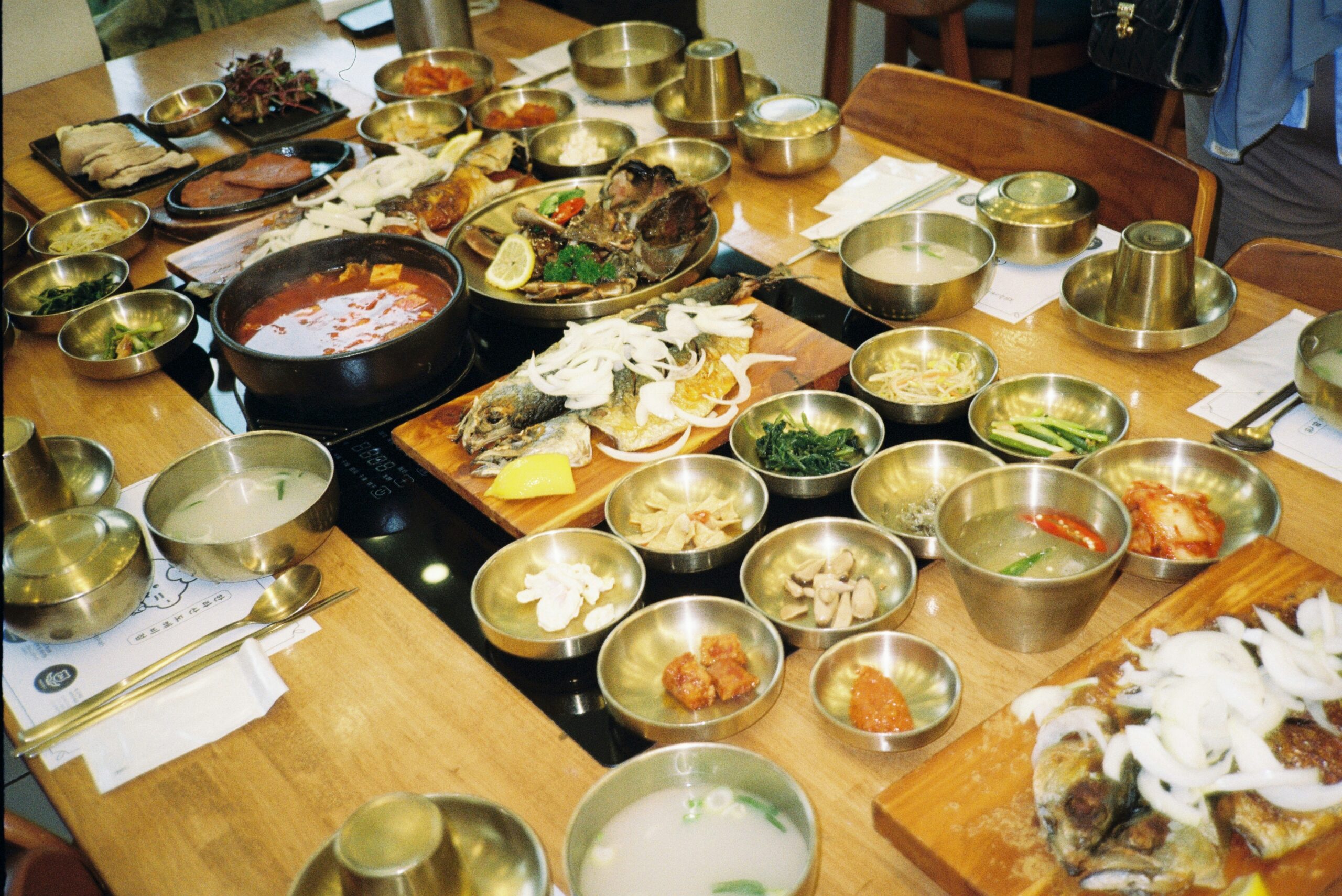
Language and culture intertwine inseparably in Korean. Understanding cultural context transforms your communication skills from adequate to impressive.
Hierarchy and Speech Levels
Korean’s formality system isn’t just about politeness—it’s about relationship recognition. You wouldn’t use 반말 (banmal) – casual speech with someone older or in a professional setting, just as you wouldn’t use 존댓말 (jondaenmal) – formal speech with close friends your age.
Modern learning tools now incorporate situational awareness training. Rather than memorizing grammar rules, you practice recognizing contexts: “Am I speaking to my friend or their parent?” This cultural immersion strategy builds intuitive language use that feels natural rather than calculated.
Indirect Communication Patterns
Koreans often communicate indirectly to maintain harmony. Instead of directly refusing, you might hear “그때는 좀 어려울 것 같아요” (geuttaeneun jom eoryeoul geot gatayo) – “That time might be a bit difficult,” meaning “no, I can’t.”
Understanding these patterns prevents miscommunication and helps you interpret what people actually mean versus what they literally say. This cultural literacy is what separates fluent speakers from merely proficient ones.
Conversational Etiquette
Small cultural habits make huge impressions. Koreans appreciate when foreigners understand concepts like 눈치 (nunchi) – the ability to read the room and respond appropriately. Showing you’ve learned not just the language but the cultural script earns genuine respect and opens deeper conversations.
Programs that integrate cultural teaching alongside language instruction, like those offered through structured Korean programs, help you develop this dual competency naturally.
Accelerating Your Progress: Proven Strategies from Successful Learners
Create Daily Micro-Immersion Moments
You don’t need hours daily—you need consistent, quality exposure. Spend 10 minutes shadowing a Korean YouTuber, 5 minutes practicing with AI conversation tools, and 15 minutes watching Korean content. These micro-sessions add up to significant progress without overwhelming your schedule.
Language Exchange with Structure
While language exchange apps connect you with native speakers, unstructured conversations often meander. Come prepared with topics, questions, and specific phrases you want to practice. Ask your partner to correct specific errors—pronunciation, particle usage, or naturalness—rather than general “corrections.”
Record and Review Yourself
This uncomfortable but effective technique reveals exactly where you struggle. Record yourself having a conversation (even with AI), then listen critically. Are you pausing awkwardly? Mispronouncing certain sounds? Using unnatural phrase constructions? Self-awareness accelerates improvement dramatically.
Focus on Output, Not Just Input
Many learners consume endless content without producing language. Real progress happens when you speak and write. Challenge yourself to use new phrases within 24 hours of learning them. This active recall cements knowledge far better than passive recognition.
For educators looking to structure this approach for students, teaching platforms with AI support can help create systematic output-focused curricula that drive measurable conversation improvement.
Frequently Asked Questions
How long does it take to have real Korean conversations?
With focused practice using modern learning tools, most learners can handle basic conversations within 3-6 months. However, this depends on daily practice consistency, quality of learning materials, and actual speaking opportunities. Structured programs that combine grammar, vocabulary, and conversation practice typically produce faster results than self-study alone.
Should I focus on formal or casual Korean first?
Start with formal Korean (존댓말) as your foundation—it’s socially safer and shows respect. Once comfortable, gradually learn casual forms by observing native speakers in context. Many modern platforms now teach both simultaneously within appropriate situations, which mirrors how you’ll actually use the language.
What’s the best way to improve Korean listening comprehension?
Active listening beats passive consumption. Use content with transcripts so you can check understanding, slow down playback to catch every sound, and practice shadowing (repeating immediately after the speaker). Variety matters too—expose yourself to different accents, speaking speeds, and topics to build comprehensive listening skills.
How can I practice Korean conversations without native speakers nearby?
AI conversation partners, language exchange apps with video chat, and self-talk exercises all provide valuable practice. Create scenarios in your mind and talk through them in Korean. Modern technology like uBitto’s platform offers structured conversation practice that adapts to your level, making solo practice genuinely productive.
Why do I understand Korean but can’t speak it?
This common phenomenon happens because passive recognition (understanding) and active recall (speaking) use different neural pathways. The solution is deliberate output practice—force yourself to produce language regularly, even if imperfectly. Speaking activates retrieval systems that listening alone doesn’t strengthen.
What Korean phrases should I absolutely learn first?
Focus on high-frequency conversational tools: greetings (안녕하세요), thanks (감사합니다), basic questions (어디/뭐/왜), agreement expressions (네, 아니요, 맞아요), and conversational fillers (음, 그러니까). These practical korean phrases unlock more conversations than memorizing random vocabulary lists ever could.
Your Journey to Confident Korean Conversations
Mastering real Korean conversations isn’t about perfection—it’s about connection. Every conversation, even awkward ones, builds your skills and confidence. Modern learning tools have democratized language acquisition, bringing authentic Korean practice to anyone with dedication and a smartphone.
The techniques outlined here work because they mirror how languages are naturally acquired: through immersion, context, cultural understanding, and consistent practice. Whether you’re using AI conversation partners, structured programs, or cultural immersion strategies, the key is regular engagement with real, practical language.
Remember that fluent speakers weren’t born knowing Korean—they practiced, made mistakes, learned from them, and kept going. Your journey follows the same path, but with better tools than ever before.
Ready to transform your Korean from textbook knowledge to confident conversations? Explore structured learning programs that combine modern technology with proven teaching methods. Whether you’re learning independently or through institutional programs, the right approach makes all the difference. Start practicing today—your future Korean-speaking self will thank you.
Practice What You Learned
Try these interactive quizzes related to this topic:














Responses