
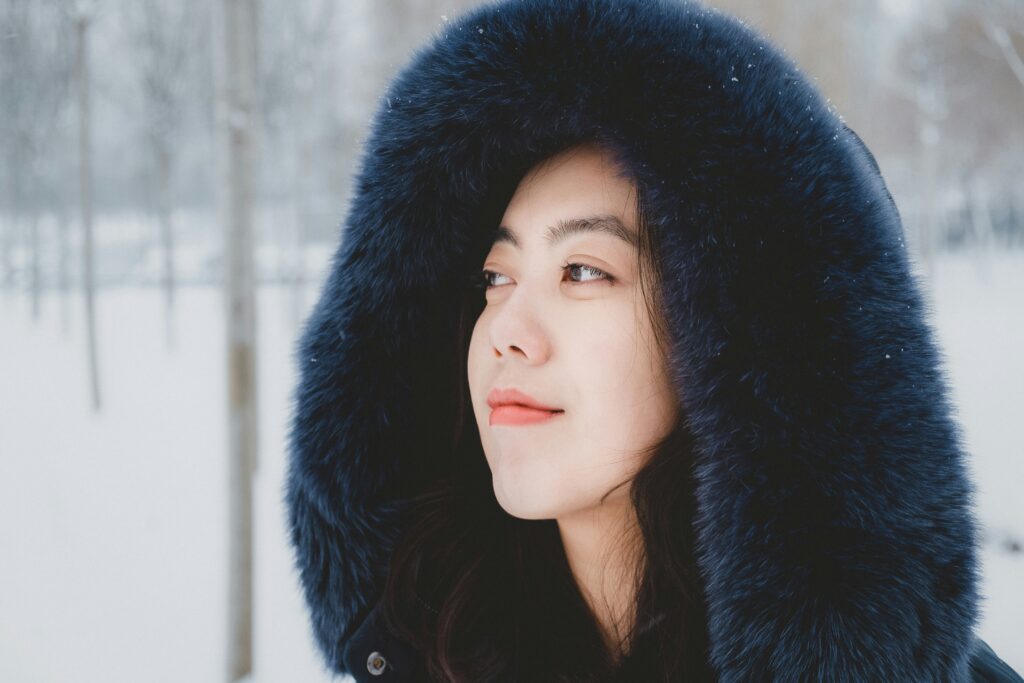
Korean Winter Skincare: Cold Weather Beauty Tips

As the icy winds sweep through Seoul’s streets and frost patterns dance across windows, Korean beauty enthusiasts know that winter is when your skincare routine either makes or breaks your complexion. The drop in temperature and humidity during Korea’s harsh winters can leave even the healthiest skin feeling tight, flaky, and uncomfortably dry. But there’s a reason Korean skincare—or 케이뷰티 (keibuti) – K-beauty—has taken the world by storm, and it’s particularly evident in how Koreans protect their skin during the brutal winter months.
If you’ve ever wondered how Korean women maintain their coveted 유리알 피부 (yurial pibu) – glass skin even when temperatures plummet below freezing, you’re about to discover the secrets that locals swear by. Let’s dive into the essential winter skincare practices that will keep your skin glowing throughout the cold season.

The Seven-Skin Method: Your Winter Hydration Hero
One of the most beloved Korean skincare techniques for combating winter dryness is the 칠중 스킨법 (chiljung seukkinbeop) – seven-skin method. Despite its name suggesting you need seven different products, this technique actually involves applying the same 토너 (toneo) – toner seven consecutive times to your face.
The process is simple yet transformative: after cleansing, pour a small amount of watery toner into your palms, gently pat it onto your face until absorbed, then repeat up to seven times. Each layer should be fully absorbed before adding the next. This method is called 결 (gyeol) in Korean beauty terminology, referring to skin texture, and it’s designed to create multiple thin layers of hydration rather than one thick application.
Why does this work so well in winter? Korean dermatologists explain that multiple thin layers penetrate the skin more effectively than one heavy application, creating a reservoir of moisture that lasts throughout the day. Popular toners for this method include those with 히알루론산 (hialluronsan) – hyaluronic acid, which can hold up to 1000 times its weight in water.
When visiting Korean 올리브영 (ollibeu-yeong) – Olive Young stores (Korea’s largest health and beauty retailer), you’ll notice entire sections dedicated to hydrating toners specifically marketed for winter use. If you’re learning Korean, these shopping trips become wonderful opportunities to practice reading product labels and chatting with helpful store assistants who are usually eager to share their skincare wisdom.

Sheet Masks and Sleeping Packs: Overnight Winter Recovery
Walk into any Korean home during winter, and you’re likely to find someone wearing a 마스크 팩 (masukeu paek) – sheet mask while watching their favorite K-drama. Sheet masks are so integral to Korean culture that they’re considered as routine as brushing your teeth, and winter is when their usage peaks dramatically.
Korean beauty brands release special winter editions of sheet masks packed with ingredients like 꿀 (kkul) – honey, 로얄 젤리 (royal jelli) – royal jelly, and 세라마이드 (seramaideu) – ceramides. These ingredients help repair the skin’s moisture barrier, which takes a beating from indoor heating and outdoor cold.
The proper way to use sheet masks in winter involves a few Korean beauty secrets:
- Apply the mask after showering when your pores are open and receptive
- Leave it on for exactly 15-20 minutes—no longer, as the mask can start pulling moisture back out
- Don’t wash off the remaining essence; pat it into your skin with your 손가락 (son-garak) – fingers
- Follow with a 수면팩 (sumyeonpaek) – sleeping pack to seal everything in
Sleeping packs deserve special mention as a Korean innovation that’s perfect for winter. These gel or cream formulas are applied as the last step of your nighttime routine and left on overnight. They create a protective barrier that prevents 수분 증발 (sumun jeungbal) – moisture evaporation while you sleep. Popular Korean brands like Laneige and Sulwhasoo have sleeping masks that have achieved cult status worldwide.
Learning the Korean terms for these products isn’t just about beauty—it’s about immersing yourself in Korean culture. When you understand that Koreans say 촉촉하다 (chokchokada) to describe perfectly moisturized skin, you’re learning the exact texture and feeling that Korean skincare aims to achieve. This is the kind of cultural nuance that platforms like uBitto can help you grasp through contextual learning, connecting language with everyday Korean life experiences.

The Art of Layering: Understanding the 10-Step Routine
The famous Korean 십단계 스킨케어 (sipdangye seukinkeeo) – 10-step skincare routine might seem excessive to newcomers, but in winter, Koreans insist it’s not just beneficial—it’s essential. Each step serves a specific purpose, and understanding the logic behind the order is key to making it work for you.
Here’s the winter-adapted Korean skincare routine:
- 이중 세안 (ijung sean) – Double cleansing: Oil cleanser first, then foam cleanser
- 각질제거 (gakjil jegeo) – Exfoliation: Only 1-2 times weekly in winter to avoid stripping the skin
- 토너 (toneo) – Toner: As mentioned, consider the seven-skin method
- 에센스 (eseonseu) – Essence: Concentrated hydration boosters
- 세럼 (sereom) – Serum: Target specific concerns like dullness or fine lines
- 앰플 (aempeul) – Ampoule: Even more concentrated than serums
- 마스크 팩 (masukeu paek) – Sheet mask: 2-3 times per week
- 아이크림 (aikeurim) – Eye cream: The delicate eye area needs extra protection
- 모이스처라이저 (moisteuraijeo) – Moisturizer: A rich cream for winter
- 자외선 차단제 (jaoeiseon chadanje) – Sunscreen: Yes, even in winter!
The key principle is moving from thinnest to thickest consistency, allowing each product to absorb properly. This is called 흡수 (heupsu) – absorption, and Koreans take it seriously. You’ll often see people gently pressing their palms against their face after each application, using their body heat to help products sink in deeper.
In winter, Korean dermatologists recommend focusing especially on products with 보습 (seup) – moisture and 진정 (jinjeong) – calming properties. Ingredients like 센텔라 (sentella) – centella asiatica and 녹차 (nokcha) – green tea are particularly popular, as they soothe skin irritated by cold weather.
Traditional Korean Ingredients for Winter Skin Protection
What sets Korean skincare apart is its integration of traditional 한방 (hanbang) – herbal medicine ingredients into modern formulations. During winter, certain traditional ingredients become especially prized for their protective and nourishing properties.
인삼 (insam) – Ginseng is perhaps the most famous Korean skincare ingredient. This powerful root has been used in Korean medicine for thousands of years, and modern research confirms its ability to improve circulation, boost collagen production, and protect against environmental damage. In winter, when skin can look dull and fatigued, ginseng-based products help restore that healthy 광채 (gwangchae) – radiance.
한방 크림 (hanbang keurim) – Traditional herbal creams often contain a blend of ingredients like 당귀 (danggwi) – angelica root, 작약 (jakyak) – peony, and 감초 (gamcho) – licorice root. These ingredients work together to strengthen the skin’s natural barrier, which is crucial when facing harsh winter conditions.
Many Korean grandmothers still make 쌀뜨물 (ssalttumul) – rice water at home for washing their faces. This milky liquid left over from rinsing rice is rich in vitamins and minerals that brighten and soften skin. While you can certainly use commercial rice water products, making your own connects you to centuries of Korean beauty traditions.
If you’re interested in trying these traditional methods, learning the Korean vocabulary around them enriches the experience tremendously. Understanding that 발효 (balhyo) means fermentation—a process that increases the potency of skincare ingredients—helps you appreciate why fermented products like 발효 에센스 (balhyo eseonseu) are so valued in Korean skincare. This kind of cultural and linguistic knowledge transforms skincare from a routine into a meaningful practice, something that language learners using uBitto often discover as they explore Korean lifestyle content alongside their language studies.

Lifestyle Habits: The Holistic Korean Approach to Winter Skin
Korean beauty culture recognizes that great skin isn’t just about what you put on your face—it’s about 생활 습관 (saenghwal seupgwan) – lifestyle habits. During winter, Koreans pay special attention to several practices that support skin health from the inside out.
수분 섭취 (sumun seopchwi) – Water intake becomes even more critical in winter when indoor heating can dehydrate you from the inside. Koreans often drink 대추차 (daechucha) – jujube tea or 유자차 (yuchacha) – yuzu tea, both rich in vitamin C and served warm to combat winter dryness while supporting skin health.
The Korean concept of 몸보신 (mombosin) – nourishing the body—extends to winter skincare through diet. Foods high in omega-3 fatty acids like 고등어 (godeungeo) – mackerel and 호두 (hodu) – walnuts are consumed more frequently in winter to support the skin’s lipid barrier. 김치 (gimchi) – kimchi, Korea’s famous fermented vegetable dish, provides probiotics that many Koreans believe contribute to clear skin.
찜질방 (jjimjilbang) – Korean spa houses become especially popular in winter. These facilities offer various temperature rooms and saunas that help improve circulation and promote deep cleansing through sweating. After a session, Koreans apply lightweight hydrating products to their freshly cleansed pores. Many jjimjilbang even sell sheet masks and skincare products on-site, recognizing that post-sauna is prime time for treatment.
Sleep is another crucial factor. Koreans use the term 꿀잠 (kkuljam) – literally “honey sleep”—to describe the deep, restorative rest that’s essential for healthy skin. During winter, when skin is regenerating overnight to repair daily damage, getting adequate 수면 (sumyeon) – sleep becomes even more important.
Perhaps most importantly, Koreans practice 피부 관리 (pibu gwalli) – skin management—as an ongoing commitment rather than a quick fix. This long-term perspective is embedded in the language itself, where skincare vocabulary emphasizes processes and habits rather than instant results.
Bringing Korean Winter Skincare Into Your Routine
You don’t need to move to Seoul or spend a fortune to adopt Korean winter skincare principles. Start small: perhaps begin with double cleansing and adding one hydrating toner that you apply multiple times. As you become comfortable, gradually introduce additional steps based on your skin’s needs.
Pay attention to the 계절 (gyejeol) – season and adjust your routine accordingly. Winter requires richer textures and more hydrating formulas than the lightweight products perfect for summer. This seasonal awareness is deeply ingrained in Korean culture and extends far beyond skincare to all aspects of daily life.
Shopping for Korean skincare products has become easier than ever with global shipping, but part of the fun is learning to read Korean product labels and understanding what you’re putting on your skin. Phrases like 모공 관리 (mogong gwalli) – pore care, 주름 개선 (jureum gaeseon) – wrinkle improvement, and 미백 (mibaek) – brightening appear frequently on products and help you identify what each formula targets.
For those serious about understanding Korean skincare culture at a deeper level, learning the language opens up entire worlds of beauty blogs, YouTube channels, and product reviews that never get translated into English. When you can read Korean reviews on sites like 화해 (hwahae) – Korea’s largest cosmetics review platform—you gain access to honest opinions and detailed ingredient analyses that help you make informed choices. This is where language learning and lifestyle interests intersect beautifully, and it’s something that interactive learning tools like uBitto’s AI-powered conversations can help facilitate, allowing you to practice real-world scenarios like discussing skincare routines or shopping for beauty products in Korean.
Embrace the Korean Winter Glow
As snow blankets the ancient palaces of Seoul and frost glazes the windows of modern apartments, Korean beauty enthusiasts are not hibernating—they’re actively protecting and nurturing their skin through winter’s challenges. The Korean approach to winter skincare is comprehensive, combining time-tested traditional ingredients with cutting-edge formulations, always rooted in consistency and patience.
The beauty of Korean skincare philosophy is that it’s not about perfection but about 관리 (gwalli) – care and maintenance. It’s about taking time each day to tend to yourself, to be mindful of what your skin needs, and to respect the seasons and their effects on your body. This mindfulness extends to the language itself—learning Korean skincare vocabulary is learning to think about beauty the way Koreans do, as an ongoing practice of self-care rather than a battle against aging.
This winter, why not transform your skincare routine into something more meaningful? Whether you’re adding the seven-skin method, trying your first sheet mask, or exploring traditional hanbang ingredients, you’re not just caring for your skin—you’re connecting with Korean culture in a tangible, daily way. And who knows? As you read product labels and learn the vocabulary of Korean beauty, you might find yourself inspired to deepen your Korean language journey, discovering that every 마스크 팩 and 에센스 bottle is not just a skincare product but a little language lesson waiting to happen.
Ready to glow your way through winter the Korean way? Start tonight with that double cleanse, pat on your toner with care, and remember: 아름다운 피부는 하루아침에 만들어지지 않습니다 (areumdaun pibuneun haruachime mandeuroji ansseumnida) – Beautiful skin isn’t created overnight. But with patience, consistency, and a little Korean wisdom, your winter skin will thank you.





Responses