
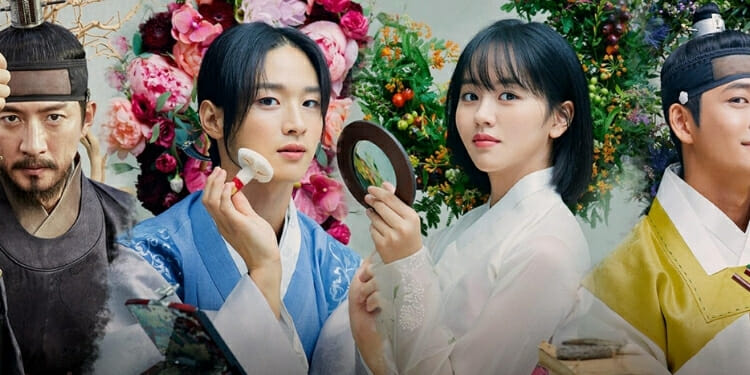
6 Fun Facts On The History Of Korean Cosmetics

The Korean skincare and makeup industry is taking over the cosmetics world day by day as we speak, with big brands like Etude House, Innisfree and Laneige being available worldwide for makeup and skincare lovers all over the globe.
This is one of the many factors of why Korea is gaining more popularity.
However, everything has a start.
Curious on the start of cosmetics back in ancient Korea and what the women back then used?
We got you covered!
1. The Start Of Makeup In Korea
Korean makeup history began in the Three Kingdoms (삼국시대) and peaked during the Goryeo Kingdom (고려 왕조).
Back then, women wore makeup to appear healthy.
In ancient times, they produced facial scrubs, beauty lotions (로션), facial creams (크림) and oils (오일), along with coloured powders (파우더), rouge and eyebrow ink.

2. The Preferred Makeup Style
In the Joseon period (조선시대), heavy makeup was restrained by the values of Confucianism.
The elite and upper-class women tended to mimic the fashion of ginyo (female entertainers) during the Joseon era.
Traditionally, Korean women wore very natural and spontaneous makeup rather than showy, sumptuous makeup like in Japan or China at that time.

examples of the preferred makeup by the Ancient Korean Women.

examples of Ancient Japanese makeup (left) and Ancient Chinese Makeup (right)
3. Types Of Ingredients Used
Ground mung beans (녹두) were used as cleansing soap after blending the powder with water as they contain an effective cleansing agent.
Lotions were made from juice extracted from plants such as gourd stems to be applied after washing.
Castor and camellia hair oil were widely used as they are less sticky.
Apricot and peach oils were believed to relieve liver spots and freckles (주근깨) and safflower oil was good for increasing skin moisture and gloss.

4. The Start Of Perfumes
Traditional cosmetics made from plants and grains had unique odors so the women added fragrance to them.
The perfume (향수) was mostly made with dried clove buds and worked as a deodorizer with medical effects which was used when bathing as it was believed to reduce stress and mental fatigue (피로감).

example of the traditional perfume pouches : Norigae (노리개) used by the ancient Korean women
5. The Importance Of Eyebrows Even Back In The Day
Ground rice and millet called “mibun” (미분) or “baekbun” (백분) were used as powders.
Mibun was blended with water or oil to stick better on the face.
Like today, eyebrows were a key feature.
Thus eyebrow ink was made from plant ash or soot in indigo, black, blue or dark brown and was used to draw various shapes of one’s eyebrows.

6. The Growth Of Celadon In Goryeo
“Yeonji” (연지) or rouge extracted from safflower was applied to the cheeks and lips.
In the Three Kingdoms (삼국시대), earthenware was mainly used as containers but the growth of the celadon culture in the Goryeo era produced abundant cosmetics containers.

Did you enjoy this blog post?
We hope that this was a fun and interesting read for all of you!
Want to know more about the lives of Korean women way back during the Joseon Dynasty?
Read more about it here!



Responses